Hey everyone, I hope you’ve all had the most lovely Christmas 2025. Life has been so very busy for me the last couple of months, and I am sure it has been for many of you too. My writing and blogging has gone out the window somewhat 😕. My poor novel is still very much in my head and waiting for those next chapters to be written. I wish this wasn’t the case and am aware it highlights just how inconsistent I am, not just with my writing, but actually, in all areas of my life.
How are you getting on? Have you been managing to set aside regular time to sit and work on your novel? What barriers are you encountering?
For me, the obstacles are many…so much to do, and so little time (sorry for the cliché). I am juggling a job, home and family commitments, and I’m trying to fit in regular exercise (with some success🙃). My writing has to find it’s place within all of this and I know it is possible, but I haven’t got it quite right yet! I know some of you will be feeling similar pressures.
I am sometimes stood watching my son play football on a Saturday morning, which I thoroughly enjoy, but yes, there are times when I’d love to be tucked away in a quiet corner of a cosy coffee shop, eating cake, drinking hot chocolate, laptop in front of me, and most importantly, the next chapter of my book unravelling. Instead, I make a plan to set my laptop up on the kitchen table later on, unlikely to happen much before 9pm, when my child is tucked up in bed, sleeping soundly, no distractions. It seems like a great plan at 10am that morning 😆. But then 9pm comes around and guess what?! I can barely keep my eyes open! I fall asleep on the sofa watching the 1% Club 😹.
Next morning, I get a whole 2 hours to myself first thing, and I dash off to the gym before the day gets started. No time to write again…maybe I’ll try again at 9pm that night, but of course, you guessed it, that doesn’t happen either 💤.
It is very easy for me to illustrate these struggles here, and find reasons to justify why a huge chunk of my novel is still waiting to be written, but…and it is a very big BUT…if I really want to finish my book, I have to make the Saturday night writing happen, and of course, sometimes it will be accompanied by a cocktail or two 😉🍹🍸. And it can’t just be on Saturday night, it has to be almost every night. I am certain that if I make time to write for one hour every evening, this story will fly onto the pages. And my goodness – how happy would this make me! The thought of being at the editing stage of the process is so very exciting.
I find using a timer very effective, so I’ll set it for 25 minutes, all distractions put away (primarily the 📱), ignore my partner 😂. That 25 minutes goes by fast and I get a surprising amount of writing down! The timer soon rings, I take a quick break, and then back on the timer for another 25 minutes…and there it is, almost an hour of work ✅. I don’t know how long it takes you to write a chapter, I suppose it depends on many factors, but for me, it takes an awfully long time. An hour is better than nothing though, right!
Wish me luck and please let me know how you are getting on, how are you making time to write, and how do you overcome your own obstacles?
I’m already looking ahead to my next blog in a week’s time, when I am determined to have at least one more chapter finished 📖.
Sending each and every one of you you all the motivation and writing magic for 2026🪄.
Hi everyone, I haven’t been posting over the last month, as I have been focusing on my cosy mystery novel. I have written a few chapters over the last couple of weeks and I have thoroughly enjoyed every minute of writing although, as a lot of you will understand, fitting it in around a job and all my other life commitments is not easy. There really are not enough hours in the day!
As I write further into my cosy mystery, I keep coming back to the same question – is my protagonist Martha interesting enough? Does she have enough personality? Is there something missing?
I always wanted Martha to be that quieter figure among her two sidekicks (and close friends), she is ‘the brains behind the operation’. I have written in an earlier blog about developing Martha and I keep referring back to the checklist I used for this:
Is she kind?I feel sure she is. She is a really good soul and I think this comes through strongly in my writing, maybe even too much!
Is she brave?She will be as the story unravels.
Is she active (not passive)? Yes, although she is quieter than her two sidekicks. She is the leader and makes the vast majority of decisions. Her sidekicks are the louder and more eccentric characters.
Am I sure she is not a fool or pushover?I think so, but I do need to be mindful of this.
Does she grow throughout the story?There is a lot of potential for her to grow but I do need to consider this more. What is it about Martha that is going to be changed or developed by the time the reader reaches the last chapter? How will I portray this?
I feel I can check off each of these areas for Martha, yet I still can’t shake this feeling that Martha is not quite enough!
I feel I need to do more with Martha’s character. I am now considering the following 3 areas as I keep working on her:
Does she have a major goal?
Does she have a strong enough motivation and reason to try and achieve her goal?
Is the reader going to like and care about Martha?
Have you had this same battle with your protagonist? I would love to hear about your experiences of developing your protagonist, particularly if you also felt they were too passive…how did you overcome this? Any tips and ideas are gratefully received in the comments below.
How much do you think about your target audience when you are writing your novel? I ponder on this from time to time as I write. As a naive, first time writer, I had not initially given my target audience much thought, but sub-consciously I think I was imagining my target reader to be someone very much like me. But how many of the smaller details of my novel should I be tailoring towards my target readers?
Who are my target audience?
My novel is a cosy mystery…after doing some research, I was not too far off the mark when I was envisaging myself as the type of person to read my book. Cosy mysteries are typically read by over 40’s, predominantly women. They are often well educated. They enjoy puzzles and problem solving, and many of these readers enjoy hobbies like cooking, crafts, and community involvement. They tend to have a focus on community and relationships.
Women aged 40-44 in the UK alone make up 6.55% of population, over 3 million people. In the USA they make up over 10 million of the population. That is a lot of potential readers! 👩🏽️👩🏼🦰👩🏾🦱👱🏻♀️
My protagonist is younger than the target audience – is this a problem?
My protagonist Martha is in her late 20’s. Quite a lot younger than the target readers, who are 40+. I started to wonder why I had chosen this age for Martha 🤔. I wanted Martha to be single and to have a love interest, and whilst of course a woman in her 40’s or 50’s can also have this (and does!), I find it easier to write about this when the character is younger. Dating in your 40’s and 50’s – have you done this? I’m told it is like wading through mud, with various complications along the way e.g. divorce, children. I didn’t want this additional complexity, as the romance side of the story is secondary to the main cosy mystery genre.
I was single and dated in my 20’s, so I feel like I have inside information here, it’s familiar territory (certainly not straightforward though, but is dating easy at any age? I’m sure not).
Requirements for the protagonist
The target readers enjoy strong female protagonists. This has been an interesting dimension of Martha for me to think about, as discussed in a previous blog (Essential Character Traits for Your Novel’s Main Character). I had not initially developed Martha as a strong or assertive character, but have developed this part of her personality as I have gone further into my writing journey.
Reader Persona
Thinking about the profile of the ideal reader helps me tailor the characters to the desired reader, by giving them hobbies, likes, dislikes, jobs, places to go, and possessions that represent the character in some way, which the reader will find familiar/relatable.
I’ve considered aspects of Martha, such as what she wears, how she does her hair, what she enjoys doing in her spare time, what sorts of places she visits. I suppose Martha and her friends are also a bit more sophisticated than I was when I was 27 😆.
How relatable does the protagonist need to be?
Do readers want the lead character(s) to be relatable? Like them? I don’t think readers need or want to see themselves reflected in a character, and actually, for myself, I don’t want to read about someone just like me.
Readers enjoy connecting with characters through empathy, finding out about the character’s feelings and emotions, maybe a struggle they are going through. It is appealing to a lot of readers (apparently). I’m learning as I go here, so I apply my learning to myself, to aid my understanding.
Thinking about a book I really loved reading – ‘The Secret life of Evie Hamilton’ by Catherine Alliott, which I read in my late 20’s. The protagonist, Evie Hamilton, is a well-to-do Oxfordshire wife and mum to a teenager. This was not relatable to me at all when I read the book (I was single, lived on a shoestring, and clueless!) Yet I loved the book and I loved the character. I had so much empathy for the struggles and debacles Evie goes through in the book. I also found it hilariously funny in places, which is high praise indeed, as I rarely find myself laughing when I read a book, not the way I did when reading this particular book.
This would suggest that readers don’t always want to relate in a practical or physical sense, but on a more emotional level there needs to be that connection. This would ensure the book is relatable to readers in a much more adaptable and fluid way. It will be different for each individual reader, but fundamentally the same.
Giving my target audience opportunities to reminisce
By writing about a woman in her 20’s, am I reminding my target audience (40+ women) of younger days? Something that may still feel familiar. Maybe they were also single in their 20’s and like Martha, navigating relationships and new romances, enjoying close friendships with like minded best friends.
Recurring characters
My research tells me that readers of cosy mysteries enjoy recurring characters. This links in with the target audience’s focus on community and relationships – I think they want to feel a part of the protagonist’s community. I have always imagined my book to be part of a series, set in the same small town, the same town locals reappearing each time, so this feels a very easy part of the assignment to incorporate. I enjoy writing about the different characters, threading them through the story and carving out their different relationships with Martha. Some feature more than others but they all play a part in the town’s community spirit, that surrounds Martha.
How important is location for my target readers?
For me, reading is an escape, and I enjoy finding myself somewhere different. I wanted Martha to live somewhere with different scenery and climate to my usual day-to-day life. I live in England and I don’t enjoy the dull and chilly British weather, never have and never will ☔. It is therefore not at all surprising that Martha lives in a part of the world where it is very hot and dry 🌵🌞. She lives in a small, quaint, friendly town, with dessert and cacti close by.
I am unsure if this setting will be appealing to my target readers, or how important it really is to them. But I do not question it too much. I follow my heart on this because developing Martha’s town has been my favourite part of the writing experience so far, I trust in this part of my work, more than any other.
Giving the readers a puzzle to solve
Readers of cosy mysteries tend to enjoy puzzles, which makes perfect sense, as a mystery is just that. But why do people enjoy the challenge of solving puzzles (or the crime, when reading a mystery)? It is intellectually stimulating and requires problem solving skills, to engage in this aspect of the story. It offers an opportunity to explore human nature – the motives behind criminal behaviour, and the complexities of morality. My target audience are often well educated, so it figures that they want to give their brain a bit of a workout when reading a book.
The reader wants the satisfaction of resolution by the time they finish the book. They are expecting the truth to be revealed, mystery solved, and order restored. I am nowhere near the end of my book yet, so will revisit this later on when I get that to that stage. I feel quite overwhelmed thinking about how I will do this.
Keeping the crime lightweight
Mysteries can offer a mix of suspense, excitement, and fear. I love all of these dimensions when reading a cosy mystery. But the fear needs to be fairly lightweight. Cosy mystery readers are not looking for anything heavy, violent, or gruesome, they are there primarily to piece the puzzle together. When working out the plot, this is something I keep at the forefront, and finding the right balance requires thought and reflection. I find that I know what feels right when writing about the crime itself, although the research can feel a tad uncomfortable, googling questions like ‘What type of poison can a normal person access?’
Keeping the target audience in mind as I write
I continue to consider my target audience when writing the story, to make sure their needs are being met – the need for escapism, the need for relatability, the need to feel empathy for the character(s), the need to solve a puzzle. Lots to think about….
I am conflicted about how much of themselves they need to see in the book. There are contradictions in this blog. But I think it is always helpful to keep considering them and how they may interpret different aspects of the story and characters. After all, if my target audience don’t like it, what is the point?!
Who is your target audience? What factors are you taking into account when writing for your target audience? How important do you think it is to take your target audience’s needs into account when writing your novel?
Please feel so very welcome to add your own experiences and comments, I would love to hear from you.
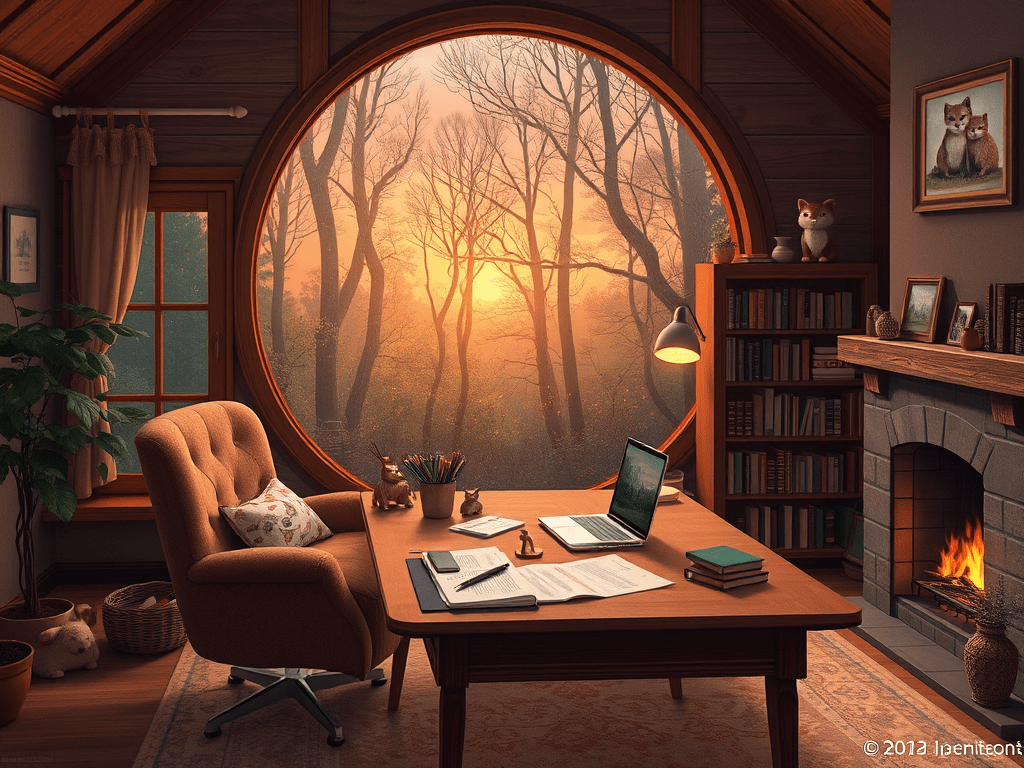
Are you lucky enough to have your own study for writing? Or like me, do you just pitch up wherever works best on the day. I don’t have the luxury of a study so I use various spaces around my home, none are ideal but I make it work. A room of my own with a big desk and comfy chair is something I will always aspire to have (and maybe one day I will 🍀).
But for now, I manage with what I have, and that’s okay. As I have read about the writing process more and learnt more about the way others manage it, I have come to the reassuring realisation that it is a struggle – to get our novels out of our heads and onto paper (or screen). It’s a huge task that presents many obstacles along the way. That is partly why I started this blog, I felt alone in the writing rabbit hole, and wanted to unite with like-minded aspiring writers.
I am very aware that my brain kicks into top gear late afternoon time, I can get through my work like a chainsaw through butter between the hours of 4pm-9pm. 9am in the morning though, and I’m working at a snail’s pace 🐌. It is different for everyone, some of us are night owls, some of us are early risers, many are somewhere in between. I’m envious of people who get up early and fly through their work before the day has even really started. I am not one of those people 🤭.
Add to that the lack of quiet dedicated space to write…it can feel tough to find that productive and creative headspace.
I chose the featured image for this post, of the study looking out at the night time city, because I like the idea of sitting up late writing, looking out at the night sky, watching the busy city from afar. Some of us have no choice but to sit up and write late, we may be doing other jobs during the day, looking after children, and many other daytime commitments. I am one of those people and I am still in the process of establishing a consistent writing routine in the evenings.
But ultimately, because my brain is most active late afternoon/early evening, sunset needs to feature for me. I chose the 4 pictures below as possible dreamy writing study rooms. They are all extremely appealing to me. Which would you choose? 💻
The Big City 🌆
Looking out at the big city, knowing it is all going on out there but being tucked away in my own little space, watching from afar, feels very safe and reassuring for me.
2. Cosy Woodland 🌲🌳
This woodland scene is just idyllic to me, I love being around the trees and wildlife. But maybe it would be a little spooky looking out at that woodland in the middle of the night, all alone! 👻
3. Beach ️🏖️
Very little needs to be said about this beach study, so tranquil for so many of us.
4. Small Town 🧋
The small town setting, looking out at little cafes and shops, popping out to grab a coffee at 9pm, this is so inviting to me. Perhaps like the big city scene, I like the idea of knowing there is lots going on just outside my window, but far enough away that I can sit and write peacefully 📝.
Please let me know in the comments which study you would choose? Or maybe none of these would work for you, you may have a different image in mind. Please share your ideas and unite on here with other writers, I would love to hear from you.
Do you question your status as a writer? I do…all the time. Why though?
Growing up as a ‘non-creative’ type
I briefly discuss in my first blog that I did not grow up in a creative family. My mum…yes, she was creative, but totally unaware of her potential. She didn’t have the time or inclination to invest in creative pursuits. My parents didn’t encourage or support me or my siblings to explore creative hobbies, it just wasn’t what we did. We were a working class family and spare time was spent grafting for extra money, not making things. I don’t think they pro-actively discouraged us, it just didn’t interest them, they had never gotten joy or fulfilment from doing something creative. From a fairly young age, I put myself in the ‘non-creative’ box and rarely thought about it, until well into my adult years.
Thinking about writers specifically, my parents saw them as people who were so far removed from themselves. Writing a book was something they saw as unattainable and unrealistic for people like ‘us’, and if it wasn’t going to generate fairly immediate and fruitful income, what was the point? 💴
And then there was school, which seemed to be a place where the creative people made themselves known and everybody else was invisible (in the creative subjects), much like the sporty people in PE. Nobody was looking for us quieter, undiscovered creators who had not yet realised our potential, we were lost and overshadowed by our bolder and more self-aware peers. I felt written off, the teachers had limited time and they preferred to invest it in my more obviously artistic peers.
My first step into the creative world
I wasn’t sure what I wanted to do after school, but I know I did not give one ounce of consideration to a career in anything remotely creative. I found my way into a career which required 0% creativity, certainly not in an artistic way. I was enjoying my job but I felt like something was missing. I felt sure there was more out there for me.
It didn’t start with writing, it started with a sewing class…I found an ‘Introduction to sewing’ course, where I learnt how to use a sewing machine and make a tote bag. I loved it! That was the start of my creative journey. I initially felt unsure that I fitted into this new world of haberdashery, beautiful fabrics, patchwork, dress patterns, but quickly realised I could teach myself a great deal just by watching YouTube videos and buying a few handy books. I found myself wondering how it took me so long to start 🧵.
Finding my way to writing
Fast forward 10 years and many tote bags later, I still love to sew but again, I started to feel like something was missing. I enjoy reading but found myself struggling to find stories that grabbed my attention, they didn’t offer a world that I wanted to explore or spend time in. And then it occurred to me, I am trying to find the perfect story, characters and place, which already exists in my own mind. It probably isn’t out there because it’s right there in my own imagination. The penny finally dropped – why don’t I just write my own novel?!
The adventure begins – finding the Writing Rabbit Hole
And there it was, my next creative adventure. I hesitated for a slow second before diving head first into the Writing Rabbit Hole. Is the word ‘adventure’ over-the-top? I don’t think so. This is scary and overwhelming, but also exciting and fun. If it doesn’t feel enjoyable, at least some of the time, it probably won’t work out, certainly not for me. Maybe it’s different for those who have only ever really known a vocation in writing or some other artistry, but for me, I’m trying to find my way out of a career that feels somewhat boring. I’m battling repressed creativity.
I love living in the world of my protagonist Martha when I’m writing, and I’m learning to be flexible and adaptable, altering ideas, reflecting and applying my learning as I go.
Keeping my writing aspirations a secret
Nobody knows I’m writing a book! So of course, nobody knows I write this blog either🤫. I just can’t bring myself to tell anyone. I feel like they’ll laugh at me, question why I would do this, or suggest I can’t do it. I ask myself why it matters what they think, but it does matter to me. I still haven’t fully worked out why.
Trust and belief in myself 📑
I have concluded that I trust my gut and I believe in myself, but I’m not ready to justify that to other people. The book will do that for me one day…I almost add in ‘I hope’ here but I resist (it is not needed).
I love the small town setting that I have created for my protagonist Martha, I love Martha, and I love Martha’s friends. I am slowly creating a plot that is unfolding perfectly. There is still a lot to learn and I may be on blog 500 before the book is finished 😆, but it doesn’t matter, my book is happening 📖.
Your journey into the Writing Rabbit Hole
Are you secretly writing a book or do you tell your friends and family? Do you question your value in the writing world like me? Please share your thoughts on this topic in the comments, I’d love to hear from other aspiring writers 📝. Have you been creatively repressed? And if you have, how are you fighting back now? It doesn’t matter where you come from, you can write if you want to, don’t let anyone tell you different!
Please reach out and like this post or subscribe, if you enjoy finding your way through the Writing Rabbit Hole with me 😍.
Did you have to work hard to create your central character? Or did they just seem to emerge? I had a clear visual for my protagonist, from the very beginning, she was just there. She’s called Martha and I will refer to her often throughout this blog. For those that have not read my earlier blogs, my novel is a cosy mystery, and Martha is a small town business owner who finds herself attempting to solve a murder.
As I started working through the first few chapters of my novel, I thought I already had a solid formulation for Martha’s personality and general demeanour. BUT…then I heard a chapter on James Thayer’s podcast – Essential Guide to Writing a Novel, where he talks about the task of developing the protagonist, and I found myself backtracking. I realised there was still work to do, and I should not skip or rush it, because Martha is so explicitly key to the success of my book!
James Thayer suggests 5 objectives to consider when crafting out your main character. I do not want to claim James Thayer’s advice as my own in any way, so must be clear that this blog is about my learning from his podcast. As discussed in an earlier blog, I find his guidance so very helpful, and I want to share this with you all. I will do this by explaining how I applied his teachings to the development of Martha.
James Thayer suggests the following 5 considerations when developing your protagonist:
Kind when it counts
Brave when they need to be
Active, not passive
Should not be a fool
Ability to grow
Number 1 – ‘Kind when it counts’ – I felt that I had this well covered, kindness was the first trait that sprung to mind, when Martha was created in my head. But I did think on the ‘when it counts’ part…I have concluded that Martha’s kindness and goodwill needs to shine through at the right moments in the book, but not in all the moments. I don’t want her to be a total pushover, that will not make her the lead character my story requires. The kindness should not be too overwhelming or governing for Martha, but she is infinitely kind, and this will be evident at frequent junctures.
Martha’s kind nature allows me to initiate opportunities for her. She is well liked by the small town community and people find her approachable and a good listener. They open up and share information with her, which will aid Martha in her quest to solve a mysterious crime.
Number 2 – ‘Brave when they need to be’ – I have not fully worked out how to portray this in Martha, but she is going to be attempting to solve a murder, so I feel confident I can inject bravery into her character, because she will face danger at various points. I’ve also considered ways I could do this earlier on in the story…possibly by referring to past adversity for Martha. I can see that these more complex dimensions of Martha will strengthen her character considerably. I also believe they will make her more appealing and enchanting to the reader. I haven’t yet worked out the role of Martha’s family in the book, they could be a way to introduce earlier adversity, or perhaps a friendship that went wrong (with someone in Martha’s tight-knit community), with Martha showing the courage to forgive and offer an olive branch.
Number 3 – ‘Active, not passive’ – Martha was too passive when I started this book. She has to push the plot forward, make decisions, and be the driving force for solving the mystery. I reflect on this often to make sure Martha is being assertive when interacting with others, and taking the lead in her investigatory endeavours. Martha has two sidekicks in my book, and without the advice in James Thayer’s podcast, I think these sidekicks would have ended up bossing Martha around, which would not have been right for my story. I talk more about the sidekicks towards the end of this blog.
Number 4 – ‘Should not be a fool’ – I quickly dismissed this when thinking about Martha, she is no fool. She runs a successful business, she has a nice home, she has close and loyal friends, and she has hobbies that enhance her life. I envy Martha in fact 😆. James Thayer explains that the readers need to respect the protagonist, they will not care or want to accompany a character they do not regard highly. This makes so much sense to me…a fool can quickly become tiresome and annoying can’t they! And that is not someone you want to journey through a story with. He also explains that the protagonist does not need to be brilliant or smart, and they can still do something foolish – this resonates a lot when I think about my own favourite characters from past reads. I looked up the definition of a fool – Google tells me a fool is someone who acts unwisely or does not care for the consequences of an action. This definition confirms for me that I don’t need to worry about Martha being perceived in this way, she is thoughtful, considerate, and she has good judgement.
Number 5 – ‘Ability to grow’ – Yes, this one I felt confident on. By the end of my novel, I anticipate Martha’s ability to grow will become very apparent, but I have pondered if this is enough. I’d like to show this side of Martha before the finale, which will require at least one small win fairly early on, either through her investigatory efforts, or something related to her personal life. I will make sure this starts to materialise after the first few chapters, once readers have gotten to know and understand her. I believe this will instil confidence in Martha and keep momentum going for her mission to solve the small town murder.
The constant awareness and reflection of these 5 objectives is necessary, because I know it will be easy to overlook them and get absorbed into other aspects of the story. As I continue to develop Martha throughout the book, I will need to keep critically reviewing these 5 dimensions of her character, to check I am threading them through Martha’s actions and the way she interacts with others.
What do you think about these character traits? What have been the key traits that you have focused on when developing your own protagonist? I hope that consideration of these 5 dimensions will help you to further develop your own central character.
I like Martha a lot, but I think I’ve enjoyed developing her two sidekicks the most, who I am sure will come up more in a later blog. Martha is more composed, calm and reserved, but her two sidekicks have quite different personalities, giving more balance to the narrative as the mystery unfolds. They had to be this way, in order for Martha to achieve breakthrough moments with her investigation. Martha’s best friend Lennie is bold and confident, she does not hold back, and this makes her the ideal sidekick for someone like Martha (most of the time!), although Martha’s more measured approach means she is often unaware of this. Martha finds herself trying to talk the fearless Lennie out of risky situations (to no avail). The other sidekick, Pippa, is the ‘Rachel’ friend that I talk about in an earlier blog (about basing characters on friends). Pippa is insecure and a little weird, she often seeks out advice and reassurance from Martha. After a cocktail or two, she will ask inappropriate questions and unwittingly stumble across new information, aiding Martha’s investigation. I like to think of Martha like Minnie Mouse, Lennie as Daisy Duck, and Pippa has to be Goofy. Have you balanced out your main character with trusty and lovable sidekicks? Or perhaps it is the other way around for you and your sidekicks are the voice of reason? Please feel free to share your own experiences of character development, all comments are very welcome. I’d love to hear about how this process has panned out for you📝.
Please also let me know if there is an area of novel writing that you’d like to hear more about. If I have relevant experiences/ideas/resources to share, I will try to write a blog on this for you.
Working out where to set your story is an important tunnel in the writing rabbit hole. Like most tasks attached to my mission of writing my novel, it has taken more time and consideration than I anticipated. My cosy mystery is set in a small, quaint, sociable town, where people really know each other and cross paths in various settings, for example the gift shop, ice-cream parlour, the wine bar, etc. There are many little establishments that I want to include. I want readers to develop a clear picture of these places as the mystery unravels.
When I think about some of my favourite books, I am remembering the vision that I have crafted in my head, all of which have stemmed from small details within the writing. My vision will be different to others who have read the same book. This led me to consider books that are made into films (or movies for my fabulous American readers). I like nothing more than to watch one of my favourite books come to life on the big screen, it feels like a real treat when it happens. But I’ve always said that I have to read the book first, and if I watch the film first, I’m not reading the book afterwards. I have referred to my love of Harry Potter in an earlier blog…I’m a big fan of Harry Potter films, but I must confess that I have not read any of the books. I watched the films first.
I am sure J K Rowling set the scene faultlessly in the stories, but if I had read the books first, I’d have filled in the inevitable gaps myself, like I do with any story I read. When reading a book we self-construct so much of the content using our own imagination, we do it without thinking about it. Everyone develops the little details in their own unique way – isn’t that one of the wonders of reading? But a film/movie does all the work for us, all the visual details are right there in front of us, with little effort required.
Seeing a novel unfold in a film is fascinating, some of the details are probably quite similar to those we have already conjured up (when reading the book), but some might be quite different. I think this is the reason people are often disappointed when they watch the film, it’s too different to the representation they have already formed whilst reading the book. I have concluded this is why I have to read the book first, because that way, I don’t miss out on the opportunity to visualise all the little details in my own exclusive way. When you are watching a film unravel later on, it is easier to accept the differences, because it is a lot less work to just watch and absorb. Reading requires a lot more investment, for me it becomes tedious to read without the opportunity to craft little details out myself (if a film has already done that for me).
This brings me back to the development of the small town in my own book, where my lead character Martha and her friends attempt to solve a murder. I have to be mindful that I want to immerse the reader into Martha’s lovely little town of residence, but it shouldn’t do all the work for the reader. Too much descriptive text will slow the pace and quickly become boring. There needs to be intention behind the reveal of the little details, leading the reader to develop their own one-of-a-kind place.
Which details of the setting have you grappled with in your own book? For me, Martha’s home has been a big one…I had fallen deep into the writing rabbit hole when I found myself researching Martha’s front door in far too much detail, before coming to the realisation that the reader does not need to know what colour her front door is, or what type of wood it is made of! I know that sounds somewhat neurotic but it demonstrates how lost I get in the detail, often quite unnecessarily.
One question that I have really loved finding the answer to is ‘Where in the world does Martha live?’ I knew I wanted it to be somewhere within the USA – all my favourite cosy mysteries are set in small American towns, so it just had to be this way for my book. But there are 52 states right! So which one to pick? This was fun for me to research because I really enjoy American geography.
I knew it needed to be somewhere with plenty of hot, sunny weather…I love the way everything feels so easy when the sun comes out, life seems to move at a slower pace when it’s hot. I love the clothes, the flip flops, the smell of sun lotion, sitting outside in the garden at 9pm without a jumper (or sweater for my American readers). Even that feeling when you get into a hot car and right away open all the windows, waiting for the air con to kick in, there is nothing I do not enjoy about the hot weather. I also live in the UK, so hot days are quite the novelty!
Can you guess which state I picked? I have put some clues in the pictures below 😉.
I hope you have found this blog helpful to read when thinking about the location of your own novel. Please fee free to share your own experiences, have you enjoyed developing the setting for your book? Did you base your story on a real place, or develop a fictional one? Do you prefer to develop a location that is close to home, or somewhere totally different? Some of you may be working within the realms of worldbuilding, which sounds like a lot of fun and a lot of work! All comments are welcome 📝.
Imagine one of your friends tells you they’ve based a character on you! How would you feel? I can imagine feeling intrigued and slightly nervous to learn more. My first question would be ‘What is their name?’ and even the answer to that would be fascinating and invoke feelings of sentimentality.
Have you based any of your characters on a friend or family member? My research tells me a lot of us do. Some use their ex-partners as a baseline as well, which I think I need to give more thought to. I’m not sure I’d enjoy writing about an ex-boyfriend, but when thinking about the men from my past, I can see that there are lots of traits I could pick out and use…some good and some not so good 😆.
Ex-partners aside, I come to one of my most beloved and cherished friends, Rachel. Rachel is a friend I have had since childhood, we became closer in our teenage years and have been reliable allies ever since. I wondered if ‘allies’ was the right word to describe us – allies are defined as ‘individuals, groups or nations that have joined together for a mutual benefit or to achieve a common purpose’, so yes, allies is fitting, because me and Rachel have a common goal – to survive the emotional rollercoaster of life and try to enjoy the ride!
Out of all the people in my life, why have I picked Rachel to focus on, when developing one of my main characters? Because my leading character, Martha, needs a ‘Rachel’ in her world. Every girl needs a ‘Rachel’, I’m not sure if everyone is lucky enough to have one though, and I don’t take mine for granted. I appreciate her unfaltering support, love and loyalty. Rachel always listens, she always understands, and she never judges me. But…Rachel is also a complex and unusual character, she battles with mental health issues, she has always been single (and happy to be), she wears her heart on her sleeve, she leaves the room when sad moments unravel in a film, she avoids conflict at all costs, she worries about what other people think of her (a lot). I don’t think she has ever uttered an unkind word to another. She also drives me bananas and on quite a regular basis I hear myself telling her ‘don’t put up with that’ or ‘tell them no’, not that she ever takes this advice 😆.
I want my lead character, Martha, to have a ‘Rachel’ to lean on. I want Martha’s ‘Rachel’ to be the loyal and supportive friend that my ‘Rachel’ is to me. But I also want Martha to bring something to the friendship, and I hope my ‘Rachel’ thinks I do this for her. My ‘Rachel’ can’t hold her drink, she has one glass of wine and she is quite tipsy, she has two drinks and she’s slurring, she has three drinks and she’s dropping her wine glass, falling over and asking others very personal and inappropriate questions. She’s a riot but also a liability in these moments.
I want to make sure I put Rachel’s weird and wonderful character to good use in my book. She will certainly enjoy a glass of wine or two, and I would like to incorporate the way Rachel asks inappropriate questions. Martha’s ‘Rachel’ will unintentionally stumble upon crucial information that will aid Martha’s investigation, through her drunken questioning.
I hope that Martha’s ‘Rachel’ will bring an extra level of depth and complexity to my book. Maybe some humour too. Would I ever tell my ‘Rachel’ that a character in my book is based on her? I don’t know…would you? Or maybe you already have? Your own experiences of developing your characters, based on friends, are welcomed in the comments box below.
Maybe you’ve based a character on somebody who is not a friend at all, but on a person you don’t like very much, or someone who has wronged you in some way? This is a dimension of my book I have not yet thought about, but I think I will. I will let you know in a future blog if I go any further with that, somebody certainly does spring to mind but I need to think on that a bit more 🤔.
A few weeks after I started my book, the writing rabbit hole truly felt more like a labyrinth, I wasn’t sure I would find my way out. I needed a helping hand and it was at this point I came across a podcast on Spotify. I am delighted to say this podcast has already given me endless breakthrough moments on my novel writing journey, I can’t imagine writing my book without it.
The podcast is called ‘Essential Guide to Writing a Novel’ by James Thayer. I am not affiliated to James Thayer or Spotify in any way, but I hope it will help you on your writing journey too, if you decide to listen to it. The podcast is widely available, not just on Spotify.
I find it’s best to only listen to one episode at a time, and to then take some time to process. I think about how to apply the learning to my own book.
‘Episode 5 – Creating compelling characters’ was particularly informative and practical for me. I had quite a clear picture in my head of the 3 main characters in my story, but after listening to episode 5, I realised they needed more thought and development, I hadn’t given enough consideration to some elements. James Thayer talks about making sure your main character is ‘kind when it counts’, which I felt I had already captured well for my demure leading character Martha, but he also suggests the character needs to be ‘active, not passive’, and I reflected there was work to be done there. I will talk more about Martha in a later blog and how I am developing her persona.
If you are quite a few chapters into writing your book, you may find James Thayer’s podcast will make you question or amend your writing so far, almost like an early editing tool. Please be prepared for this potential backtracking. This has been a tricky learning point for me, as I am quite methodical, I like to finish a chapter and move onto the next – this does not work when writing a novel! New ideas come to light, twists and turns unfold in unplanned ways, plot holes arise…going back to make amendments seems unavoidable for any dynamic writer. I’m adapting!
At the end of each chapter, John Thayer says the simple but effective words ‘Keep tapping those keys’. When stuck at a dead end in the writing rabbit hole, it takes real strength of mind to find your way out of the darkness. You have to keep going, keep writing, keep tapping those keys, and if you do, you’ll eventually start moving towards the light. Its a great feeling when you do.
If you do decide to listen to ‘Essential Guide to Novel Writing’, I’d love to hear your thoughts on it and welcome you to leave a comment below. Or maybe you have found other podcasts that have aided your writing journey? Comments and sharing of resources is encouraged and appreciated on here 🙂.
How much of your book should reflect reality and how much of it should take your reader away from the pressures and stresses of life? This has not been an easy question for me to find the answers to since I started my novel…
I’m a logical realist, but in contrast, I also like to get lost in the world of Harry Potter, and I don’t question how the magic of the Wizarding World could happen, because it is not intended to be representative of anything real. As I write my novel, I find myself trying to achieve something that is somewhere in between the two. My book is not set in a fantasy world with places like Hogwarts and The Leaky Cauldron, but it is also not intended to be entirely representative of the real world and all the hardships that we face, as this would produce a pretty tedious, boring, bland, dull, I could go on, but you get the gist – a lacklustre read at best.
My book needs to be relatable for my readers – even the world of Harry Potter has glimmers of reality, with the portrayal of social injustice, corruption, and the complexities of human relationships, which illustrates the importance of striking a balance. But I am also aware that people read fiction to get away from real life, to spend a short while in a make-believe place. It’s an escape for many.
My novel is a cosy mystery, this genre is meant to take the reader into a charming and welcoming place, often a small town, where people feel safe enough to leave their doors unlocked at night. In reality, not many of us live in a such a desirable location. Readers who choose a cosy mystery want to become immersed, surrounding themselves with the friendly and gracious characters, a few quirky or bizarre ones thrown in, and an enviable sense of community that this fictional town can offer.
My plotline is a task I am still grappling with and…my gosh, it’s harder than I was prepared for. The main obstacle is the realist in me, which is fighting against my imagination. I have an idea but when I start to think it through, I find myself saying ‘no that would never happen’ or ‘that wouldn’t be possible because….’ It’s easy to get stuck there, which can be quite de-motivating. I’m learning to reassure myself that it is okay if I veer away from logic and common sense, and am learning to be a less rigid thinker.
I know that someone is going to be murdered in my novel and my main character will start investigating (in an unofficial capacity). But setting up the murder…how!!?? To illustrate how this pans out in my head, here are a few examples where I have come up with a murder concept and then challenged this with my need for realism, and then ideas on how to overcome the obstacle by changing the way I think:
Could the victim be attacked walking home from the bar one night? I start to wonder, wouldn’t the town have CCTV, in which case the murderer would surely be caught on camera?How to overcome? Maybe the town in my book doesn’t have a lot of CCTV – I try to rationalise – it’s a small town so maybe they don’t worry about security, but then I remind myself, no need to do this, just move forward with the notion that they don’t have a lot of CCTV.
Could the victim be poisoned via a gifted bottle of wine, maybe from a secret admirer? But I start questioning how the perpetrator could tamper with a bottle of wine without making it obvious they’d opened it before gifting it? Wouldn’t the lid be loose? Wouldn’t my victim suspect something was wrong? How to overcome? Maybe the victim just didn’t notice the lid wasn’t as tight as usual when opening, or maybe it was a bottle of homemade wine or some other delightful beverage.
The poison idea is one I am exploring a bit more, so I consider, what if the victim gets poisoned whilst out somewhere in the town, perhaps at a wine tasing event in the local winery – but I again start pondering – how could the perpetrator get away with that if out in a public place? Wouldn’t someone notice? And wouldn’t this make the perpetrator pool quite small? How to overcome? Maybe nobody noticed…simple as that. Or maybe it was a very busy event with a lot of people present.
I should mention that I need to establish a great mystery around the victim’s murder, the police and town need to be somewhat flummoxed, otherwise there would be no reason for my main character to take on investigatory activities.
Thinking about such a morbid topic does not come easy for me, but the crime itself is honestly such a small component of the story, it is merely setting up the rest of the book. I have to come up with a murder that is not too dark or gory, whilst still being a serious crime that needs solving. Fortunately, I don’t know any experienced murderers to consult with, but jokes aside, even googling on this topic feels a bit uncomfortable. Typing into Google ‘Ways to poison someone’ or ‘How would someone purchase rat poison’ feels pretty wrong and I do not welcome any constructive feedback on this topic, that would take this blog down quite a dark turn wouldn’t it! But such questions do demonstrate my draw to ensuring the plotline is realistic.
Finding this balance between reality and fantasy is all part of my journey through the early burrows of the writing rabbit hole, and one I suspect I will battle with, all the way to the end! My novel will be woven with frequent glimmers of reality, reminding the reader that my characters do live in a similar world to them, but one where life is a little bit sweeter, and drizzled in honey!
















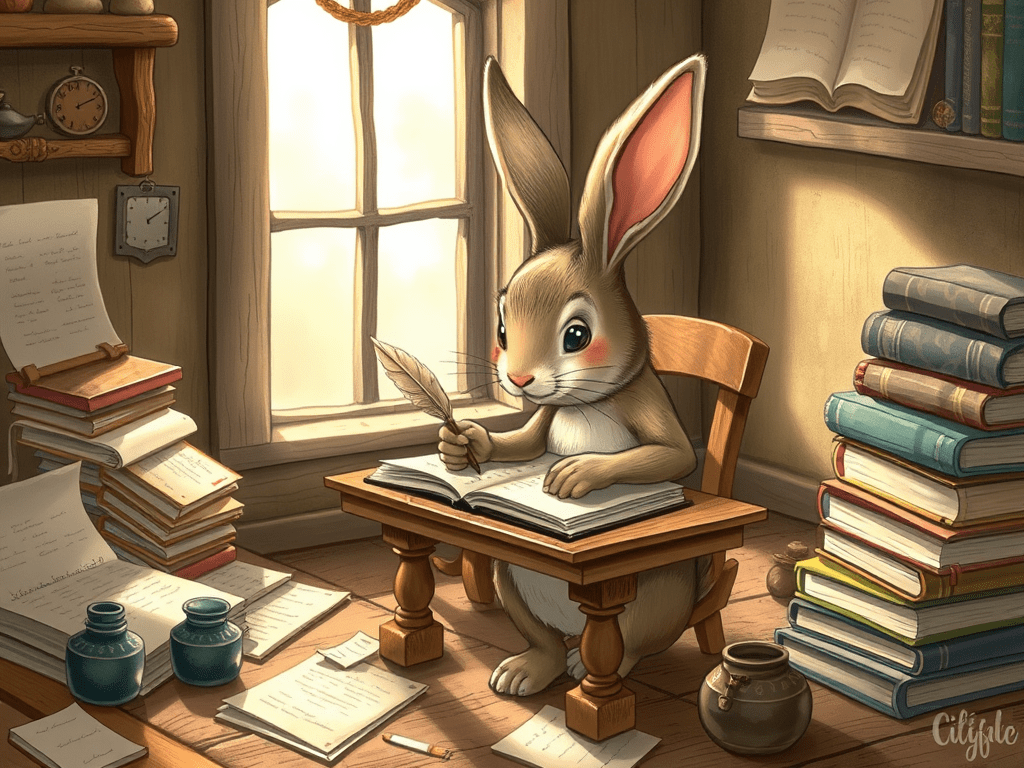
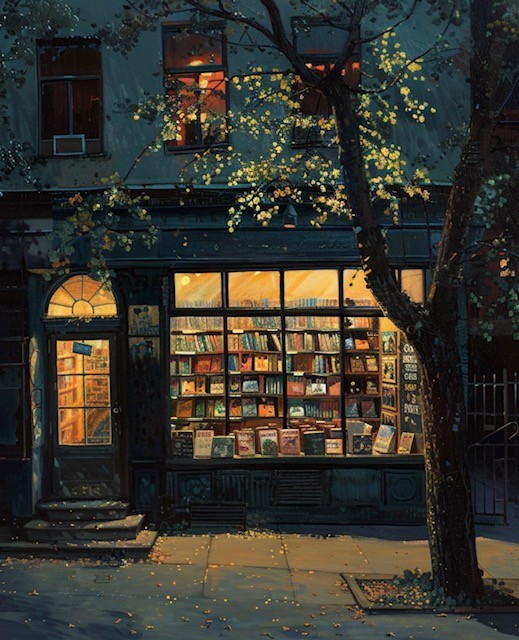

 The Writing Rabbit Hole