
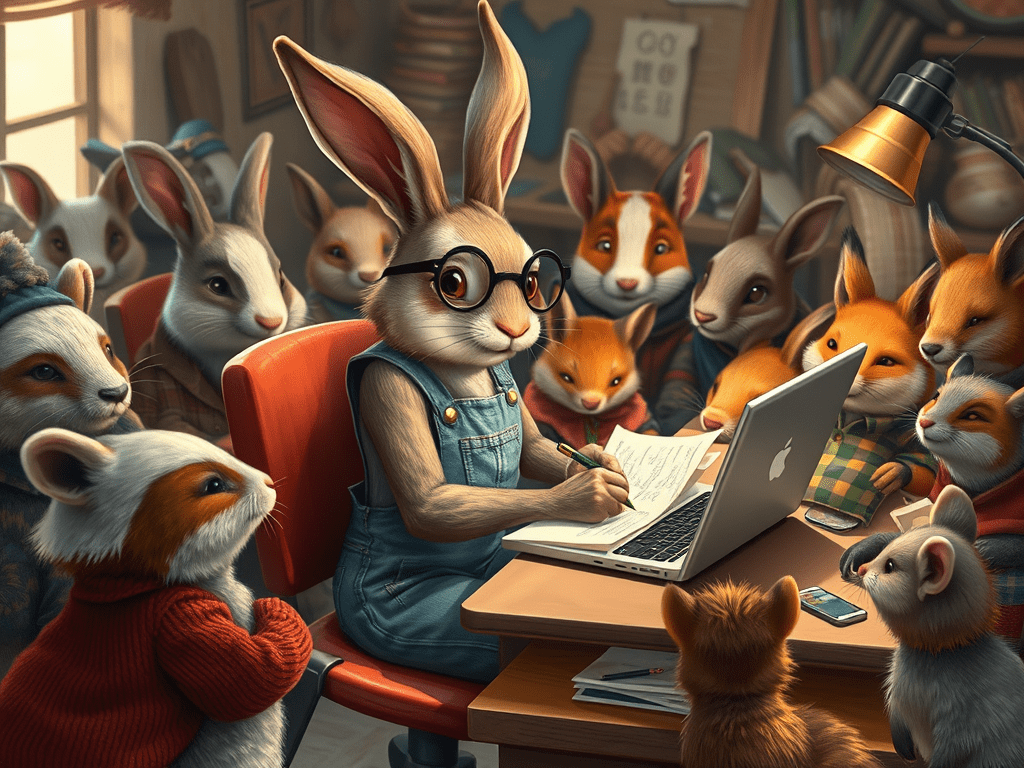
How much do you think about your target audience when you are writing your novel? I ponder on this from time to time as I write. As a naive, first time writer, I had not initially given my target audience much thought, but sub-consciously I think I was imagining my target reader to be someone very much like me. But how many of the smaller details of my novel should I be tailoring towards my target readers?
Who are my target audience?
My novel is a cosy mystery…after doing some research, I was not too far off the mark when I was envisaging myself as the type of person to read my book. Cosy mysteries are typically read by over 40’s, predominantly women. They are often well educated. They enjoy puzzles and problem solving, and many of these readers enjoy hobbies like cooking, crafts, and community involvement. They tend to have a focus on community and relationships.
Women aged 40-44 in the UK alone make up 6.55% of population, over 3 million people. In the USA they make up over 10 million of the population. That is a lot of potential readers! 👩🏽️👩🏼🦰👩🏾🦱👱🏻♀️
My protagonist is younger than the target audience – is this a problem?
My protagonist Martha is in her late 20’s. Quite a lot younger than the target readers, who are 40+. I started to wonder why I had chosen this age for Martha 🤔. I wanted Martha to be single and to have a love interest, and whilst of course a woman in her 40’s or 50’s can also have this (and does!), I find it easier to write about this when the character is younger. Dating in your 40’s and 50’s – have you done this? I’m told it is like wading through mud, with various complications along the way e.g. divorce, children. I didn’t want this additional complexity, as the romance side of the story is secondary to the main cosy mystery genre.
I was single and dated in my 20’s, so I feel like I have inside information here, it’s familiar territory (certainly not straightforward though, but is dating easy at any age? I’m sure not).
Requirements for the protagonist
The target readers enjoy strong female protagonists. This has been an interesting dimension of Martha for me to think about, as discussed in a previous blog (Essential Character Traits for Your Novel’s Main Character). I had not initially developed Martha as a strong or assertive character, but have developed this part of her personality as I have gone further into my writing journey.
Reader Persona
Thinking about the profile of the ideal reader helps me tailor the characters to the desired reader, by giving them hobbies, likes, dislikes, jobs, places to go, and possessions that represent the character in some way, which the reader will find familiar/relatable.
I’ve considered aspects of Martha, such as what she wears, how she does her hair, what she enjoys doing in her spare time, what sorts of places she visits. I suppose Martha and her friends are also a bit more sophisticated than I was when I was 27 😆.
How relatable does the protagonist need to be?
Do readers want the lead character(s) to be relatable? Like them? I don’t think readers need or want to see themselves reflected in a character, and actually, for myself, I don’t want to read about someone just like me.
Readers enjoy connecting with characters through empathy, finding out about the character’s feelings and emotions, maybe a struggle they are going through. It is appealing to a lot of readers (apparently). I’m learning as I go here, so I apply my learning to myself, to aid my understanding.
Thinking about a book I really loved reading – ‘The Secret life of Evie Hamilton’ by Catherine Alliott, which I read in my late 20’s. The protagonist, Evie Hamilton, is a well-to-do Oxfordshire wife and mum to a teenager. This was not relatable to me at all when I read the book (I was single, lived on a shoestring, and clueless!) Yet I loved the book and I loved the character. I had so much empathy for the struggles and debacles Evie goes through in the book. I also found it hilariously funny in places, which is high praise indeed, as I rarely find myself laughing when I read a book, not the way I did when reading this particular book.
This would suggest that readers don’t always want to relate in a practical or physical sense, but on a more emotional level there needs to be that connection. This would ensure the book is relatable to readers in a much more adaptable and fluid way. It will be different for each individual reader, but fundamentally the same.
Giving my target audience opportunities to reminisce
By writing about a woman in her 20’s, am I reminding my target audience (40+ women) of younger days? Something that may still feel familiar. Maybe they were also single in their 20’s and like Martha, navigating relationships and new romances, enjoying close friendships with like minded best friends.
Recurring characters
My research tells me that readers of cosy mysteries enjoy recurring characters. This links in with the target audience’s focus on community and relationships – I think they want to feel a part of the protagonist’s community. I have always imagined my book to be part of a series, set in the same small town, the same town locals reappearing each time, so this feels a very easy part of the assignment to incorporate. I enjoy writing about the different characters, threading them through the story and carving out their different relationships with Martha. Some feature more than others but they all play a part in the town’s community spirit, that surrounds Martha.
How important is location for my target readers?
For me, reading is an escape, and I enjoy finding myself somewhere different. I wanted Martha to live somewhere with different scenery and climate to my usual day-to-day life. I live in England and I don’t enjoy the dull and chilly British weather, never have and never will ☔. It is therefore not at all surprising that Martha lives in a part of the world where it is very hot and dry 🌵🌞. She lives in a small, quaint, friendly town, with dessert and cacti close by.

I am unsure if this setting will be appealing to my target readers, or how important it really is to them. But I do not question it too much. I follow my heart on this because developing Martha’s town has been my favourite part of the writing experience so far, I trust in this part of my work, more than any other.
Giving the readers a puzzle to solve
Readers of cosy mysteries tend to enjoy puzzles, which makes perfect sense, as a mystery is just that. But why do people enjoy the challenge of solving puzzles (or the crime, when reading a mystery)? It is intellectually stimulating and requires problem solving skills, to engage in this aspect of the story. It offers an opportunity to explore human nature – the motives behind criminal behaviour, and the complexities of morality. My target audience are often well educated, so it figures that they want to give their brain a bit of a workout when reading a book.

The reader wants the satisfaction of resolution by the time they finish the book. They are expecting the truth to be revealed, mystery solved, and order restored. I am nowhere near the end of my book yet, so will revisit this later on when I get that to that stage. I feel quite overwhelmed thinking about how I will do this.
Keeping the crime lightweight
Mysteries can offer a mix of suspense, excitement, and fear. I love all of these dimensions when reading a cosy mystery. But the fear needs to be fairly lightweight. Cosy mystery readers are not looking for anything heavy, violent, or gruesome, they are there primarily to piece the puzzle together. When working out the plot, this is something I keep at the forefront, and finding the right balance requires thought and reflection. I find that I know what feels right when writing about the crime itself, although the research can feel a tad uncomfortable, googling questions like ‘What type of poison can a normal person access?’

Keeping the target audience in mind as I write
I continue to consider my target audience when writing the story, to make sure their needs are being met – the need for escapism, the need for relatability, the need to feel empathy for the character(s), the need to solve a puzzle. Lots to think about….
I am conflicted about how much of themselves they need to see in the book. There are contradictions in this blog. But I think it is always helpful to keep considering them and how they may interpret different aspects of the story and characters. After all, if my target audience don’t like it, what is the point?!
Who is your target audience? What factors are you taking into account when writing for your target audience? How important do you think it is to take your target audience’s needs into account when writing your novel?
Please feel so very welcome to add your own experiences and comments, I would love to hear from you.
Tabitha 💟
 The Writing Rabbit Hole
Leave a comment